Over the last few years, artificial intelligence has dominated technology headlines and board meeting agendas alike. However, much of the public conversation remains focused on two extremes: multi-billion-dollar enterprise corporations building custom models, or basic consumer-facing AI chatbots. This leaves mid-sized businesses - companies typically generating between $10M and $500M in revenue - wondering where they actually fit into the picture.
The truth is, mid-sized companies are quietly becoming the biggest beneficiaries of practical, real-world AI applications. Free from the heavy bureaucratic red tape of Fortune 500 enterprises and equipped with far more data and resources than early-stage startups, mid-market businesses are uniquely positioned to turn AI into immediate bottom-line results.
In this deep dive, we’ll explore how mid-sized businesses are deploying AI beyond the marketing hype, the key operational benefits it brings, real-world industry use cases, and the practical challenges leaders must navigate to see true return on investment (ROI).
The Evolution of Business AI: Moving Beyond the Hype
For decades, artificial intelligence was largely theoretical or restricted to specialized data science teams in university labs and tech giants. Early business applications were rigid, required expensive custom development, and often delivered clunky, unpredictable outcomes.
Fast forward to today, and the business landscape has shifted dramatically. Cloud-native infrastructure, pre-trained large language models (LLMs), and seamless API integrations have democratized access to artificial intelligence. Modern AI tools are no longer standalone experiments; they are deeply embedded into the daily software tools companies already use - from CRMs and ERPs to accounting suites and customer support platforms.
For mid-sized businesses, this evolution marks a transition from experimental technology to pragmatic utility. Instead of spending millions attempting to build custom algorithms from scratch, mid-market companies are implementing targeted AI tools to solve specific, longstanding operational bottlenecks.
What Makes AI Ideal for Mid-Sized Businesses?
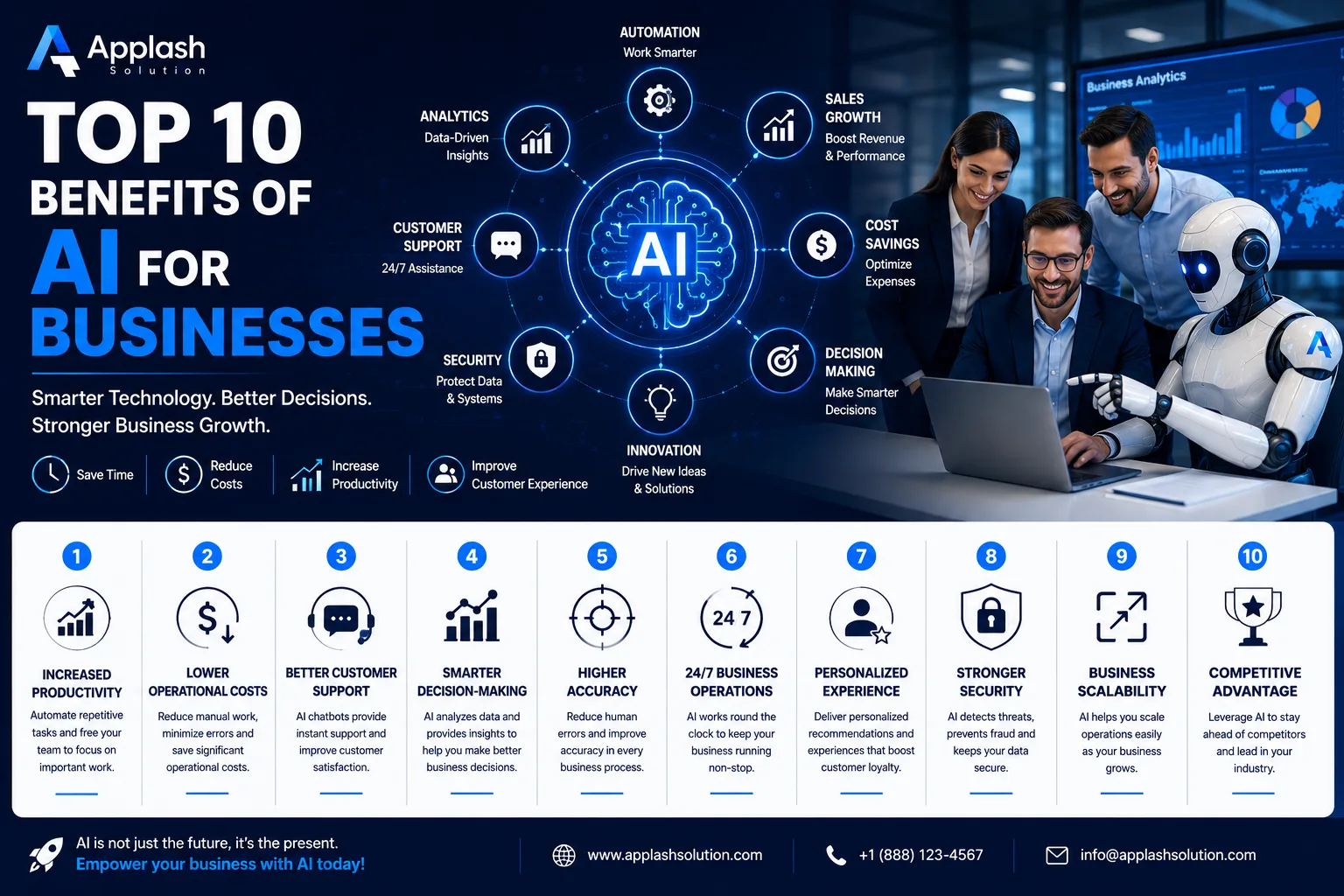
Mid-market companies face a unique structural challenge: they must scale their operations rapidly to compete with industry leaders, but they cannot afford to endlessly inflate their payroll overhead. AI meets this exact challenge with the following characteristics:
a. Agility and Execution Speed
Unlike enterprise giants that spend months in committee reviews and compliance evaluations, mid-sized firms can evaluate, procure, and deploy AI solutions in a matter of weeks.
b. Rich, Accessible Historical Data
Mid-sized companies have spent years accumulating valuable customer, financial, and operational data. This structured historical data provides the perfect foundation for training and fine-tuning domain-specific AI models.
c. Cost-Effective Scalability
Integrating AI into core workflows allows mid-sized teams to increase output - whether processing double the invoices or handling triple the support requests - without needing to double their staff headcount.
d. Fast Time-to-ROI
By focusing on clear operational bottlenecks rather than grand futuristic experiments, mid-sized businesses can achieve measurable time and cost savings within the first quarter of deployment.
Key Areas Where AI is Making a Real-World Impact
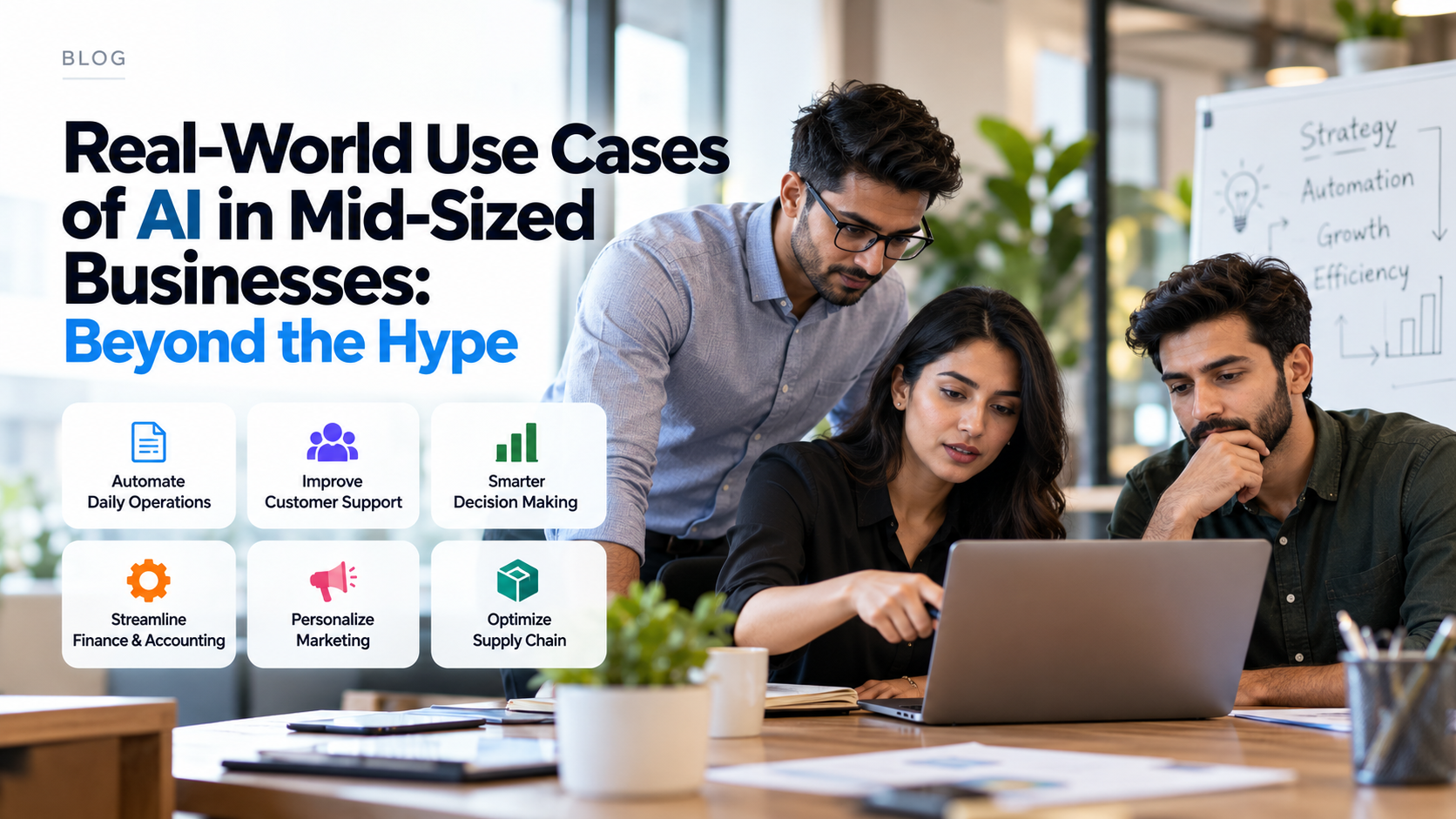
Let’s break down how practical AI applications are transforming core operations across mid-sized businesses.
a. Intelligent Document Processing & Finance Automation
Mid-sized firms in logistics, finance, legal, and healthcare often handle thousands of unstructured documents every month. Manual data entry is slow and prone to costly human errors. Modern AI tools are completely transforming this workflow:
- Optical Character Recognition (OCR) + Natural Language Processing (NLP): Automatically extracting key fields (line items, payment terms, tax IDs) from incoming invoices, contracts, and receipts.
- Automated Reconciliation: Cross-checking invoice data against purchase orders within ERP platforms instantly.
- Anomaly Detection: Flagging duplicate billings, non-standard contract clauses, or fraudulent expense claims for human review.
b. Predictive Customer Support & Service Intelligence
Generic, script-bound chatbots often annoy customers. Mid-sized companies are using context-aware, generative AI agents to deliver better support experiences:
- Sentiment Analysis & Intelligent Routing: Automatically reading incoming customer emails, determining urgency and emotional tone, and routing tickets to the right specialist.
- Agent Copilots: Drafted response suggestions generated in real time using internal knowledge bases, allowing support reps to resolve issues twice as fast.
- Summarization: Auto-generating quick summaries of long customer ticket histories so account managers can catch up instantly before sales calls.
c. Dynamic Inventory & Supply Chain Forecasting
For mid-sized distributors, manufacturers, and e-commerce companies, holding excess inventory ties up critical working capital, while stockouts result in lost revenue.
- Multi-Variable Demand Planning: AI algorithms analyze historical sales trends, supplier lead times, local weather data, and broader economic indicators to forecast demand accurately.
- Predictive Maintenance: IoT sensors combined with machine learning models monitor machinery health on the factory floor, predicting equipment failures before they cause costly downtime.
d. Sales Acceleration and Marketing Personalization
In a mid-sized B2B company, sales representatives often spend too much time doing admin tasks instead of selling. AI restores focus to revenue generation:
- Predictive Lead Scoring: Identifying which prospective leads have the highest probability of closing based on past buyer behavior and firmographic data.
- Hyper-Personalized Outreach: Generating customized email copy, proposal drafts, and account insights tailored to a prospect’s recent company news.
- Call Intelligence: Automatically recording, transcribing, and extracting action items from sales calls to keep CRM data pristine.
Key Areas Summary: Traditional vs. AI-Driven Operations
| Department | Traditional Approach | Modern AI-Driven Solution |
| Finance & Accounting | Manual invoice matching and manual expense tagging | Automated document extraction with real-time anomaly detection |
| Customer Support | Static, rule-based chatbots and manual ticket assignment | Context-aware AI copilots with automated sentiment routing |
| Supply Chain | Static spreadsheet forecasts updated once a month | Continuous predictive inventory forecasting and IoT maintenance |
| Sales & Business Dev | Manual lead prioritization and repetitive email writing | Predictive lead scoring with automated call intelligence summaries |
Real-World AI Implementation: A Step-by-Step Approach
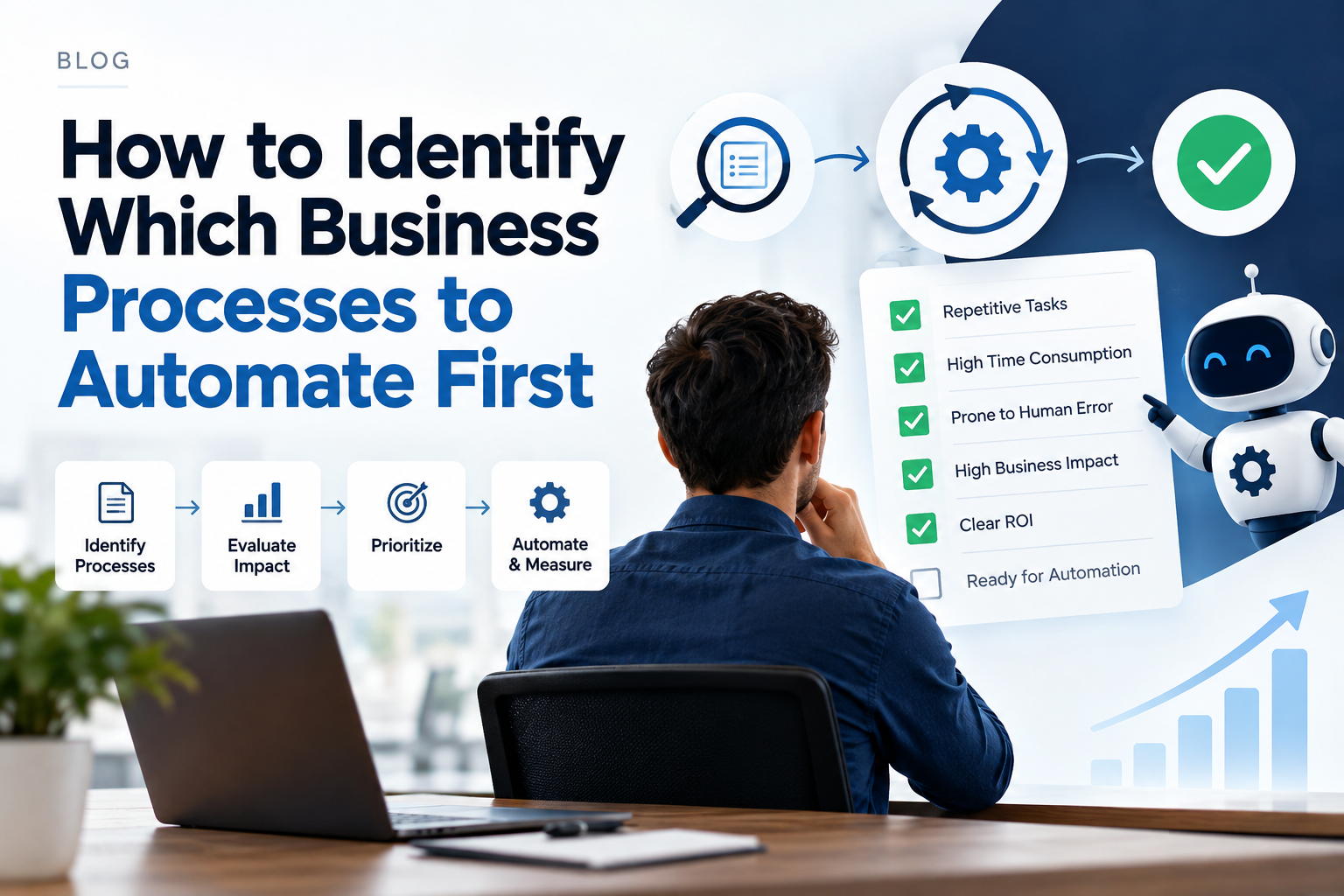
To ensure AI projects deliver tangible business results rather than becoming expensive distractions, successful mid-sized companies follow a structured implementation process:
+-------------------------------------------------------+
| 1. IDENTIFY THE BOTTLENECK                            |
|    Find repetitive tasks consuming 20+ hours weekly.  |
+-------------------------------------------------------+
                           |
                           v
+-------------------------------------------------------+
| 2. CLEAN & AUDIT YOUR DATA                            |
|    Organize internal CRM, ERP, and doc repositories.  |
+-------------------------------------------------------+
                           |
                           v
+-------------------------------------------------------+
| 3. EMBED INTO EXISTING TOOLS                          |
|    Adopt AI features within software already in use.   |
+-------------------------------------------------------+
                           |
                           v
+-------------------------------------------------------+
| 4. KEEP A "HUMAN-IN-THE-LOOP"                         |
|    Use AI to draft & assist; let humans verify & decide. |
+-------------------------------------------------------+
Challenges in Mid-Sized Business AI Adoption
Despite its huge potential, integrating AI into mid-market operations comes with a specific set of challenges that executives must manage carefully:
a. Data Quality and Fragmentation
AI is only as good as the data feeding it. Siloed systems, duplicate records, and incomplete historical logs can result in inaccurate outputs and poor model performance.
b. Change Management and Employee Hesitation
Employees often fear that AI tools are being introduced to replace them. Successful leadership teams counter this by positioning AI as a productivity tool that eliminates boring "grunt work," allowing staff to focus on strategic tasks.
c. Security, Privacy, and Compliance
Feeding sensitive company, customer, or financial data into public AI models poses significant security risks. Mid-sized firms must ensure they use enterprise-grade AI vendors that comply with strict data protection standards (such as SOC 2, GDPR, and HIPAA).
d. Vendor Noise and Over-Choice
With thousands of software vendors adding "AI-powered" tags to their products, distinguishing genuine high-value tools from superficial features can be difficult for business leaders.
The Future of AI in Mid-Sized Businesses
As AI technology continues to mature, we can expect several key trends to shape the mid-market landscape:
a. Autonomous AI Agents
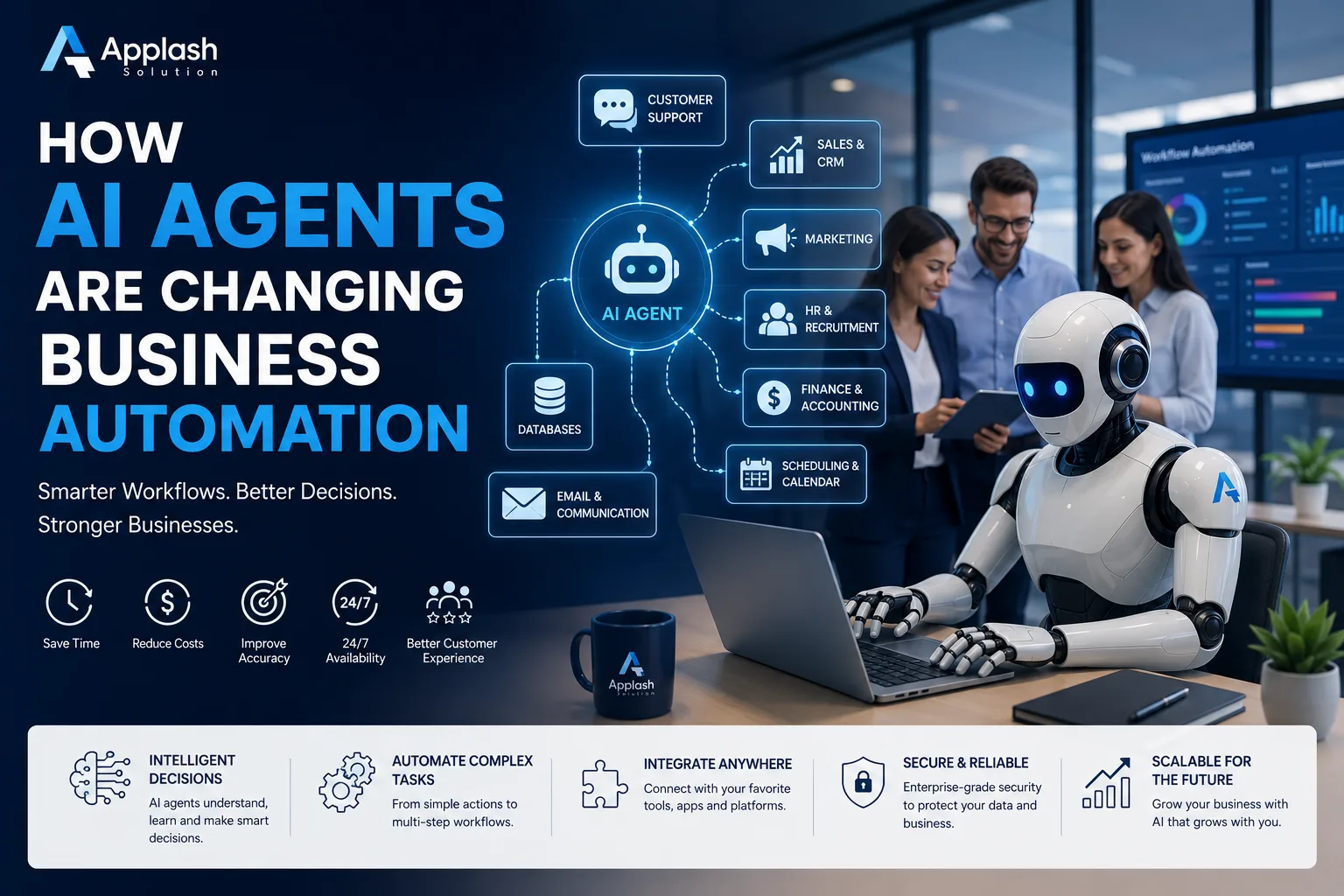
Workflows will move from simple chat interfaces to autonomous agents capable of completing multi-step tasks across systems (e.g., placing a reorder, notifying shipping, and updating accounting without manual prompting).
b. Hyper-Niche Industry Solutions
Instead of general-purpose platforms, software vendors will release hyper-specialized AI tools built specifically for niche verticals - such as regional mid-sized HVAC distributors, specialized legal practices, or boutique manufacturing plants.
c. Democratic Low-Code AI Customization
Non-technical department managers will increasingly build, adjust, and deploy custom AI automation paths using simple natural language prompts rather than writing code.
Final Thoughts
AI is no longer an exclusive tool reserved for multi-billion-dollar tech giants, nor is it just a buzzword for futuristic presentations. It has become a core operational driver for mid-sized businesses looking to increase efficiency, reduce manual burnout, and stay competitive in a fast-moving market.
The key to winning with AI isn't trying to automate your entire business overnight - it's identifying your team's most time-consuming operational bottlenecks and applying practical AI solutions where they deliver immediate, measurable impact.
Whether you are an operations director looking to streamline document processing, a sales leader aiming to boost conversion rates, or a CEO driving overall efficiency, the real-world AI transformation is happening now - and it's an opportunity your business can't afford to pass up.
- #Artificial Intelligence
- #Mid-Market Strategy
- #Business Operations
- #Pragmatic Tech
- #Digital Transformation
Work with Applash
Have a process you want to automate?
Tell us how your business works today. A senior person reads every message and replies within one business day.